Proves Three Monsanto Corn Varieties’ Noxiousness to the Organism

Proves Three Monsanto Corn Varieties’ Noxiousness to the Organism

Friday 11 December 2009

by: Le Monde with AFP   |  Le Monde

photo
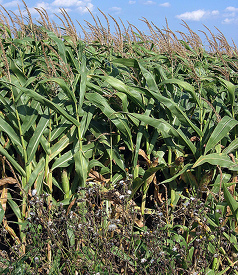
GMO cornfields in Canada. A new European study "clearly reveals … new side effects linked with GM maize consumption" affected the liver and kidneys, but also other organs for three Monsanto GMO corn varieties. (Photo: DawnOne)

A study published in the International Journal of Biological Sciences demonstrates the toxicity of three genetically modified corn varieties from the American seed company Monsanto, the Committee for Independent Research and Information on Genetic Engineering (Criigen, based in Caen), which participated in that study, announced Friday, December 11.

"For the first time in the world, we’ve proven that GMO are neither sufficiently healthy nor proper to be commercialized. [...] Each time, for all three GMOs, the kidneys and liver, which are the main organs that react to a chemical food poisoning, had problems," indicated Gilles-Eric Séralini, an expert member of the Commission for Biotechnology Reevaluation, created by the EU in 2008.

Caen and Rouen University researchers, as well as Criigen researchers, based their analyses on the data supplied by Monsanto to health authorities to obtain the green light for commercialization, but they draw different conclusions after new statistical calculations. According to Professor Séralini, the health authorities based themselves on a reading of the conclusions Monsanto has presented and not on conclusions drawn from the totality of the data. The researchers were able to obtain complete documentation following a legal decision.

"Monsanto’s tests, effected over 90 days, are obviously not of sufficient duration to be able to say whether chronic illnesses are caused. That’s why we ask for tests over a period of at least two years," explained one researcher. Consequently, the scientists demand a "firm prohibition" on the importation and cultivation of these GMOs.
These three GMOs (MON810, MON863 and NK603) "are approved for human and animal consumption in the EU and especially the United States," notes Professor Séralini. "MON810 is the only one of the three grown in certain EU countries (especially Spain); the others are imported," he adds. A meeting of EU ministers over MON810 and NK603 is scheduled Monday

Translation: Truthout French Language Editor Leslie Thatcher.

Ayurveda Seminar @ SMU

Ayurveda Seminar – The Science of Life
An Introduction to Self Healing
A Seminar with His Holiness Prahladananda Swami
Tuesday December 1st and Thursday December 3rd
6:30pm to 8pm
$30 if registered by 11/24
$40 thereafter
(free for SMU students and faculty)
Topic:
Constitution Evaluation
Ayurvedic Elements
Eat and Be Happy
Healthy Living
Daily Routine
Meaning of Health
Meaning of Disease
Process of Cure
Pancha Karma
Process of Prevention
To Register or for more information:
Chandra 214-810-1371
NCD @Krishna.com www.RadhaKalachandji.com

Living Near Green Lowers Anxiety, Depression Rates, Study Finds

Living Near Green Lowers Anxiety, Depression Rates, Study Finds

By Kristen Hallam
Oct. 15 (Bloomberg) — People living near gardens, parks and other green spaces
have lower rates of anxiety, depression and poor physical health than those
living in urban areas, Dutch researchers found.
The scientists reviewed the medical records of more than 345,000 people in the
Netherlands and calculated the percentage of green space near the patients?
homes. For those with 10 percent of green space within a 1-kilometer radius of
their homes, the prevalence of anxiety disorders was 26 out of 1,000 people,
according to the study. In a residential area that was 90 percent green, the
prevalence was 18 out of 1,000.
Better health may stem from access to fresher air and more opportunities to
relax, socialize or exercise, though more research is needed to confirm those
theories, said Jolanda Maas and colleagues at VU University Medical Center in
Amsterdam. Expanding green spaces may help prevent chronic illnesses that cost
billions of dollars to treat each year, they said.
?The role of green space in the living environment for health should not be
underestimated,? they wrote in the study published in the British Medical
Journal?s Journal of Epidemiology and Community Health. ?Most of the diseases
which were found to be related to the percentage of green space in the living
environment are highly prevalent in society and in many countries, they are the
subject of large-scale prevention programs.?
The study also found fewer cases of depression, heart disease, back pain and
asthma among those living near green spaces. The link between green space and
health was strongest for children and people with low incomes, who are less
mobile and spend more time closer to home, the study found.
The research was funded by a grant from the Netherlands Organization for
Scientific Research. #Prahladananda Swami